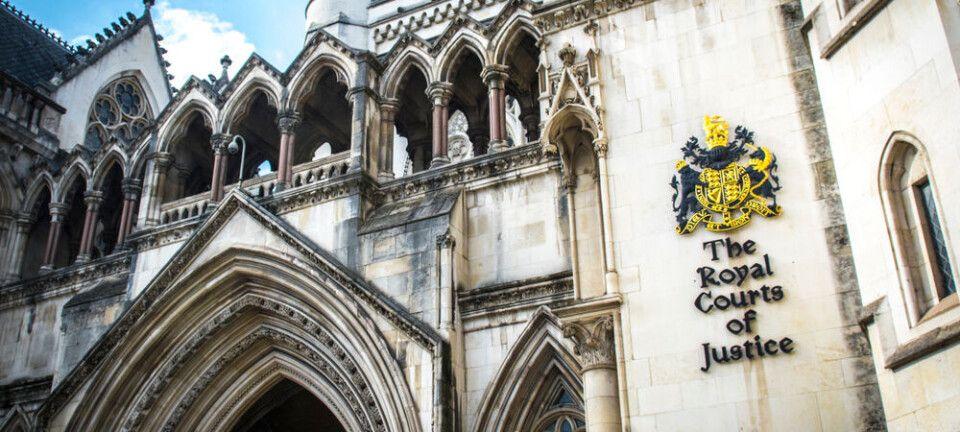
Anti-legalism: How I learned to get organising and hate the courts
by Duncan Davis, UTAW branch secretary
“Can my boss do [bad thing]?” is a question often asked by workers to their union reps. It’s an important question – one of our tasks as a union is to ensure we understand our rights as workers. It should be rephrased though, because people and organisations can and do breach workers rights and behave in all sorts of ways they shouldn’t. The real question is “what can we do when my boss does [bad thing]?”. A right is as good as our ability to enforce it.
Workers’ rights in law are largely conceived as individual rights. The most discussed parts of the Employment Rights Act extend or add to these individual rights. If you face a breach of a right by your employer, you can make a claim through the employment tribunal system. If the tribunal finds in your favour, they can impose remedies, which usually amount to compensation.
One problem with this system is it is extremely backlogged. It takes many months (or years) from starting a claim to getting a hearing. Most cases are settled before they reach that stage. By expanding rights (a good thing!) the Employment Rights Act makes that problem worse, and this is one argument the business lobby used against the bill when it was going through parliament.
Rights are often weak, not only by being limited in scope, but by having small penalties. A good example is the right to (request) flexible working. You have a right to make a request for flexible working (such as home working, part time work, compressed hours etc.) and your employer is legally required to properly consider the request. They might just ignore it though – what then? Well, the Employment Rights Act 1996 gives you the ability to complain to an employment tribunal, which may order the employer to reconsider the application and/or offer compensation capped at 8 weeks’ pay. These are very weak remedies and don’t actually get you the working pattern you need, even after completing the long process and receiving a judgement in your favour. To avoid a claim, all your employer has to do is follow a simple process and concoct one of the broad allowed reasons for why they can’t grant you your desired working pattern. The Employment Rights Act (when its changes to flexible working come into force some time in 2027) will improve this a bit, by requiring a refusal of flexible working to be “reasonable”.
It is daunting for most workers to go through the legal processes to make employment claims and it requires some specialist knowledge to properly structure claims so they have a good chance of winning. As a union, we learn and teach to collectively build this knowledge and support members to make claims to enforce rights. Some of our members have won claims with this support and many more have won settlements by weaponising the realistic threat of claims. Despite the weakness of the system, we must use it, or else employers will get away with breaching employment law in confidence that workers won’t be able to do anything about it. Our rights were hard won, we should do what we can to enforce them.
The strength and weakness of our current workers’ rights reflects the balance power between workers and business owners, as struggled for through institutions including trade unions and political parties. This is a historical process and there have been victories, defeats and compromises. Workers in early trade unions organised under conditions where the working class had no political representation and there was not only no protection for strike action, but it was prosecuted as criminal “conspiracy”. Despite the law being against them, they weren’t powerless. The fundamentals were the same then as they are now: your employer needs you and your colleagues to do the work they hired you for. No profit is made without work. They can afford to fire a lone troublemaker, or a few, or even have the state imprison or ship you off to a colony. They can’t afford to lose many. We have power when many of us act together.
By exercising this collective power, workers won rights, as concessions. It was easier for the state to offer decriminalisation and a degree of protection to workers than deal with the chaos of mass unlawful action. Criminal law applying to industrial action is now long gone, but we are still subject to the civil “tort” law where unions can be sued for damages for organising action. Protection of industrial action works by granting unions immunity from this liability as long as the industrial action is mainly in relation to a narrowly-defined trade dispute between workers and their own (so no solidarity strikes) employer, and a load of hoops are jumped through, including balloting and notice.
Workers can and do use this legal protection to strike, which often improves or protects terms and conditions. The potential to strike is the implicit power behind any union negotiation and means we don’t always need to strike to get our way. A convincing show of unity is sometimes enough.
The truth is, the law is often not on our side. Historically it has been firmly against us. Today it’s a mixed bag. There are still many areas where there is nothing legalistically we can do when your boss does a bad thing. If your job is being offshored to a different location where workers are paid less, that’s a legitimate (according to law) redundancy. If your pay is cut in real terms due to inflation, that’s standard for employment contracts, and no law provides recourse unless your pay drops below the minimum wage. If you want to resist a return to office mandate or compulsion to do work that contributes to a genocide then the individual legal mechanisms are weak.
Courts are not neutral. They interpret the written law and with all the bias that involves. Higher courts bind lower courts and this cascades all the way up to the Supreme Court, where judges decide. Judges are appointed, not chosen by a democratic mechanism (like election, or the random selection used for juries), and tend to be picked from elite class backgrounds, with a majority of senior judges being privately educated Oxbridge graduates. These judges will feel bound by the laws as written by parliament, which is subject to some democracy via elections, but they will interpret them to benefit their own class interests and personal biases.
An example of how far interpretation can go is the transphobic decision by the Supreme Court to change the Equality Act 2010 by dictating the meaning of (“sex”, “man” and “woman”) by heavily projecting onto the intention of Parliament when the law passed. This, along with subsequent guidance by the institutionally captured Equality and Human Rights Commission, is causing greatly worsening conditions for trans people. It’s worth stressing that Parliament can overturn the Supreme Court decision with additional legislation to clarify that the Equality Act is trans inclusive. The cowardly politicians have refused to act to do so, and continue to defer to the court’s “clarification”. This can only be justly resolved by threatening MPs with loss of their seats, or successfully electing alternatives, unless they change their position on this issue. We need to organise, not just for better conditions in the workplace, but to change politics.
When we recruit super-majorities within workplaces, when we organise to demonstrate our strength in numbers, when we’re not afraid to strike and our employers are afraid we will, then we should not need to wait in line to beg a tribunal to enforce our rights. The overburdening of the tribunal system is not due to a surplus of rights but rather the decline of unions and their power in the workplace over the past 40 years. We have the opportunity to rebuild and reverse that decline, and we must sieze it. Collective action is our best enforcer of rights, not the courts. Using the same muscle trained in workplace action, we can project power into the political arena to change laws to our collective benefit. We have no option other than to get organising. It’s the only way the working class can win.